
Introduction
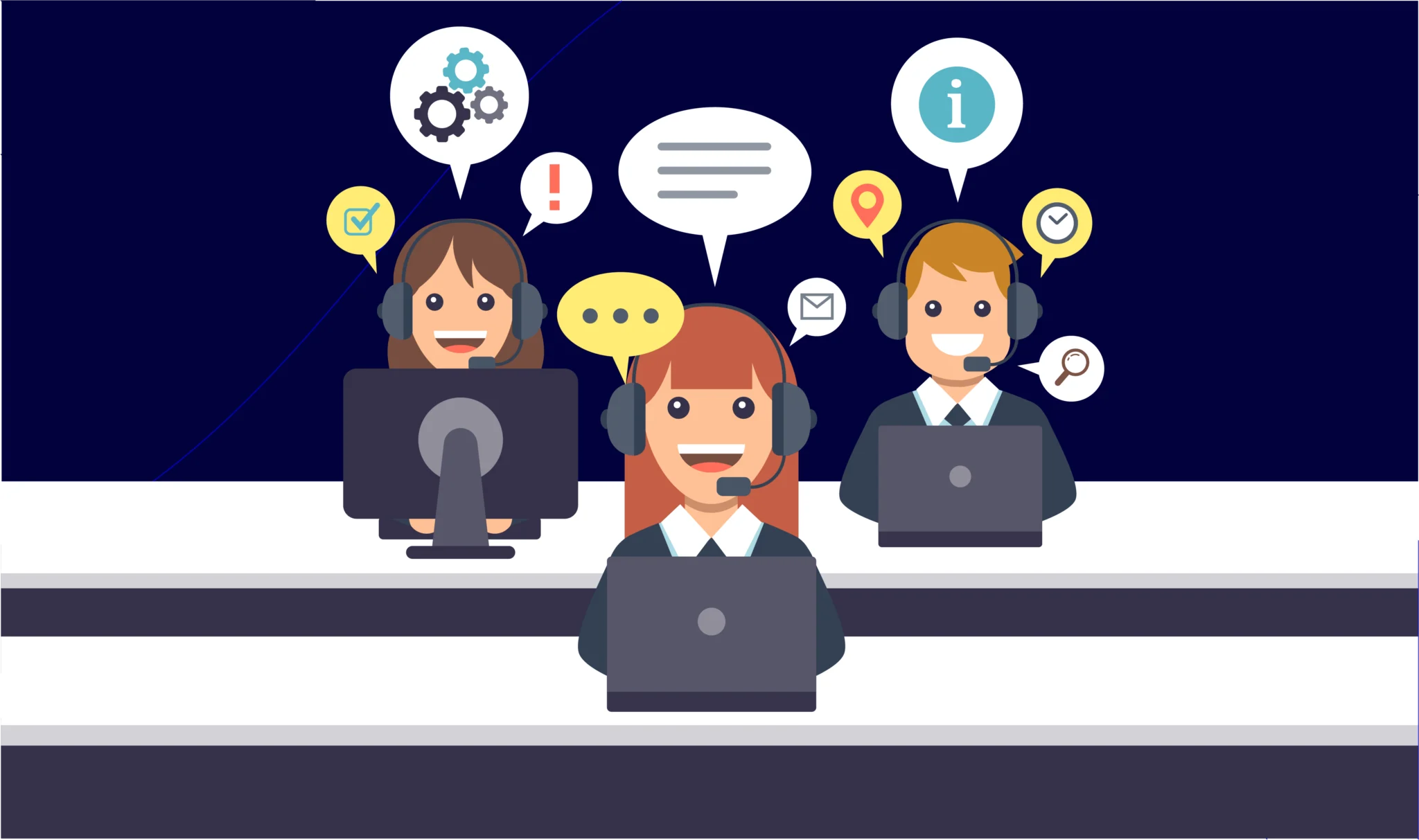
An AI RAG (Retrieval‑Augmented Generation) chatbot becomes more powerful when built as a multi‑agent system. Instead of one generalist model, it orchestrates specialized agents — such as a Sales Consultant for product recommendations, a Customer Service Officer for CRM queries and support, and a Sales Architect for bundles and strategy.
What is Multi-Agent AI Chatbot
A multi‑agent AI chatbot is a conversational system that uses several specialized agents, each powered by its own LLM and retrieval sources, to collaborate like a team. Instead of one generalist model trying to do everything, each agent focuses on a specific role, and the orchestrator coordinates them to deliver seamless responses.
For example, imagine a real‑world scenario in a red wine e‑shop:
- Peter, the Sales Consultant, chats casually with Samantha, the client, to warm her up and understand her needs. Samantha submits a checklist of red wines to see if the shop carries them.
- Instead of checking the data himself, Peter asks Yara, the Customer Service Officer, to verify the wine list against the database. While Yara is busy, Peter continues fact‑finding with Samantha — asking if the wine is for a birthday party, a wedding, or if she has specific preferences.
- Once Yara provides the verified data, Peter passes both Samantha’s preferences and Yara’s results to John, the Red Wine Specialist (Sales Architect). John uses reasoning skills to design the best wine solution — explaining why certain wines fit the occasion, how they should be stored and delivered, and how they align with the budget.
Imagine Peter , Yara and John are 3 sub-agents inside the AI RAG Chatbot, this illustrates how a multi‑agent chatbot mirrors a team of human specialists: one agent builds rapport, another ensures accuracy, and a third applies deep reasoning to architect the solution. The result is a chatbot that feels intelligent, context‑aware, and capable of handling complex workflows with a higher “IQ level” than a single‑agent system.
Types of Sub-agent
Here’s a clear breakdown of the types of sub‑agents in a multi‑agent AI chatbot and their duties:
Sales Consultant Sub-agent
Acts as the direct contact point with the client – similar to a client relationship manager or salesperson.
- Chatting with clients to build rapport and trust.
- Remembering client preferences across sessions.
- Fact‑finding to uncover needs, occasions, and motivations.
- Adapting conversation style to the client’s tone, language, and domain knowledge level.
- Detecting and responding to the client’s mood for empathetic engagement.
- Upselling and close deal
Customer Service Officer Sub-agent
Acts as the operational support agent – ensuring accuracy and reliability.
- Handling uploaded files from the client via the chat window
- Handling CRM queries (membership, loyalty points, order history).
- Providing accurate support for FAQs, policies, and compliance.
- Checking product availability against databases.
- Using web scrapers to gather external intelligence (e.g., competitor pricing, product availability).
- recall chat history from chat memeory and chat history storage.
Sales Architect
Acts as the solution designer and strategist – similar to a product architect or solution consultant in a company.
- Synthesizing fact‑finding insights from the Sales Consultant with verified data from the Customer Service Officer.
- Combining chat history from the Customer Service Officer with client preferences gathered by the Sales Consultant.
- Integrating domain‑specific or company‑specific knowledge bases to ensure compliance and alignment with business rules.
- Forming a strategic plan that includes:
- Budget calculations and pricing strategies.
- Total solution design (bundles, logistics, delivery, storage).
- Pros and cons comparisons of different options.
- Use case scenarios tailored to the client’s context.
Reason of Multi-agent AI Chatbot
A multi‑agent AI chatbot architecture is generally superior to a single‑agent setup
Cost Consideration
Single Agent Problem: If you rely on one cutting‑edge LLM to handle all tasks — from chit‑chat to heavy reasoning — you’re paying premium costs even for simple jobs.
Multi‑Agent Advantage: You can assign different LLMs with varying capabilities and costs to different roles.
- Example: A lightweight, cheaper model for the Sales Consultant (rapport building, chit‑chat, mood detection).
- A mid‑tier model for the Customer Service Officer (file handling, API queries, web scraping, CRM lookups).
- A reasoning‑heavy, more expensive model for the Sales Architect (budget planning, pros/cons analysis, solution design).
Analogy: Just like you don’t hire a university professor to teach primary school math, you don’t need a top‑tier LLM for every task. This tiered assignment optimizes cost without sacrificing quality.
Time Consideration
Single Agent Problem: A single LLM has to run tasks in a serialized timeline – pausing while it uploads, chunks, and embeds files, or retrieves and processes API data. During these backend tasks, the client may feel idle or ignored.
Multi‑Agent Advantage: Tasks can run in parallel.
- The Customer Service Officer can process file uploads or fetch data from APIs/web scrapers in the background.
- The Sales Architect can calculate budgets and design solutions simultaneously.
- Meanwhile, the Sales Consultant keeps the client engaged with warm conversation, fact‑finding, and mood‑based dialogue.
Result: The client experiences continuous, seamless interaction – never left waiting while backend tasks are processed. The chatbot feels more human, like a team working together.
Conclusion
By combining cost efficiency with seamless parallel workflows, a multi‑agent AI RAG chatbot doesn’t just answer questions – it behaves like a real-world sales team. Each agent plays its role: one builds trust, one ensures accuracy, and one architects solutions.
Together, they deliver a higher “IQ level” of service, making the chatbot more human‑like, business‑aligned, and client‑centric.
Leave a Reply